
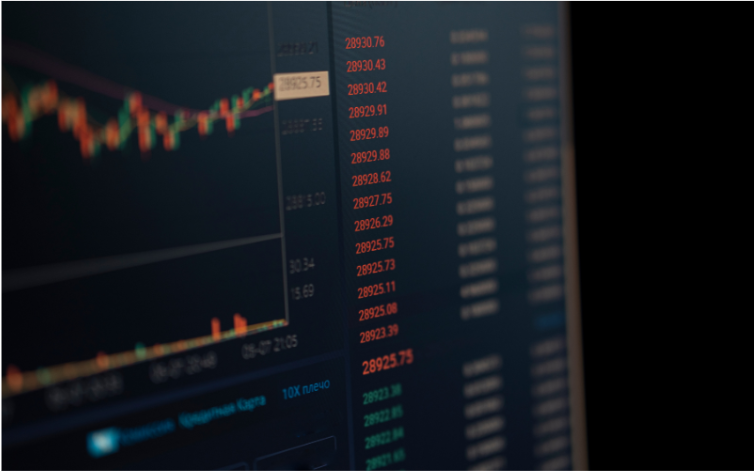
Market making in crypto is essential for maintaining liquidity and efficient price discovery. Market makers typically provide buy and sell orders, reducing spreads and ensuring smooth trading activity. However, market-making services in crypto do face significant risks and challenges that must be addressed to operate effectively.
Learn the main dangers and difficulties market makers encounter in the cryptocurrency sector.
10 Risks and Challenges of Market-Making in Crypto Market
1. High Market Volatility
The cryptocurrency market is known for extreme volatility, directly impacting market makers. Unlike traditional assets, crypto prices can swing dramatically within minutes, making it difficult to maintain balanced order books. A market-maker crypto firm must continuously adjust bid-ask spreads and inventory to prevent substantial losses. When the market moves sharply against a market maker’s position, the potential for large drawdowns increases. Volatility also creates unpredictable liquidity demand, making it difficult for market makers to execute trades efficiently.
2. Regulatory Uncertainty
Market-making cryptocurrency services operate in a regulatory grey area. Different jurisdictions have varying rules regarding market-making activities, creating compliance challenges. Some regions impose strict guidelines, while others lack clear regulatory frameworks. Uncertain regulations can lead to legal risks, unexpected penalties, or operational restrictions. Market makers must ensure compliance with anti-money laundering (AML) and know-your-customer (KYC) requirements, even when regulations are ambiguous. Sudden regulatory changes can also impact liquidity provisioning strategies, leading to operational disruptions.
3. Exchange Risks and Counterparty Dependence
Market-making crypto firms rely on exchanges for order execution and liquidity provisioning. However, exchanges pose counterparty risks, including security breaches, operational failures, and liquidity crises. Hacks and exchange insolvencies have historically resulted in market makers losing funds. Even reputable exchanges may suffer from downtime, API failures, or execution delays, affecting market-making performance. Market makers can face significant operational risks if an exchange manipulates data, imposes unfair trading conditions, or lacks transparency.
4. Impermanent Loss and Inventory Risk
Crypto market makers continuously buy and sell assets to maintain liquidity. However, holding large inventories exposes them to price fluctuations. If the price of an asset moves unfavourably, market makers suffer inventory losses. It is particularly relevant for automated market makers (AMMs) in decentralised finance (DeFi), where impermanent loss occurs due to liquidity pool mechanics. Unlike traditional market-making, AMM-based market-making service providers cannot always adjust spreads dynamically, leading to potential capital erosion.
5. Competition and Spread Compression
The market-making industry is highly competitive, with multiple players competing for the same liquidity pools. Increased competition leads to lower spreads, reducing profitability. Some exchanges encourage aggressive market-making by offering incentives, which can result in excessive order book depth without real liquidity. It creates an artificial trading environment where market makers struggle to maintain profit margins. Additionally, algorithmic trading firms with advanced AI-driven strategies often outcompete smaller market-making firms, leading to market concentration.
ALSO READ: Understanding Different Types of Exchanges and Their Impact on Token Market-Makers
6. Latency and Technological Challenges
High-frequency trading (HFT) and algorithmic execution dominate market-making cryptocurrency services. Market makers must deploy low-latency infrastructure to remain competitive. Order execution speed, API efficiency, and server uptime significantly impact performance. Exchanges with unreliable APIs or slow execution speeds create challenges for market makers. Delays in order placement can result in slippage, missed arbitrage opportunities, or execution at unfavourable prices. Maintaining a robust technology stack requires continuous infrastructure, automation, and security investment.
7. Wash Trading and Market Manipulation
The cryptocurrency market is prone to manipulation due to its relatively unregulated nature. Market-making crypto firms may encounter wash trading, spoofing, and pump-and-dump schemes that distort price discovery. Some exchanges engage in self-trading to inflate volume metrics, misleading market makers about actual liquidity. Trading in such environments increases the risk of taking on bad positions. Market makers must develop risk management strategies to detect and mitigate the impact of market manipulation tactics.
8. Capital Requirements and Liquidity Constraints
Market making requires substantial capital to provide liquidity across multiple trading pairs. Remember, market-making crypto assets can easily become illiquid during extreme market conditions. Sudden liquidity shortages, flash crashes, or liquidation events can deplete reserves, forcing market makers to exit positions at losses. Managing liquidity effectively across centralised and decentralised exchanges is a constant challenge. Without sufficient capital buffers, market makers risk insolvency during prolonged market downturns.
9. Black Swan Events and Systemic Risks
Unpredictable events, such as exchange collapses, regulatory crackdowns, or macroeconomic shocks, can disrupt market-making operations. The collapse of major platforms like FTX demonstrated how quickly liquidity can evaporate, leading to cascading failures. Market-making cryptocurrency firms must prepare for black swan events by implementing stress testing, risk mitigation protocols, and diversified exposure. However, systemic risks remain challenging to hedge completely due to the interconnected nature of the crypto ecosystem.
10. Operational and Compliance Risks
Market-making requires 24/7 monitoring and operational oversight. Failures in risk management, order execution, or compliance processes can lead to significant financial losses. Firms offering market-making services must ensure robust operational controls to prevent unintended exposure. Compliance risks, including sanctions violations or dealing with illicit funds, can lead to regulatory scrutiny. Inadequate record-keeping or reporting mechanisms further expose market makers to legal liabilities.
Conclusion
Market making in cryptocurrency is necessary to ensure liquidity and efficient market functioning. However, the industry faces many difficulties, including competitiveness, exchange concerns, volatility, and regulatory ambiguity. Market makers must then maintain technical efficiency, use sophisticated risk management, and adhere to changing rules to stay successful. The long-term performance of market-making cryptocurrency companies is determined by their capacity to adjust to changes in the market, reduce inventory risks, and efficiently manage liquidity.
Learn more about Caladan and discover how we can strengthen your token’s liquidity and market performance.